








John Calver
2026 – Taking part in Potfest Scotland – Scone Palace and Potfest in the Park – Hutton-in-the-Forest
When I began making pots in the early 1970s, I threw simple functional shapes in earthenware, and dipped all the glazes, speed and efficiency was all.
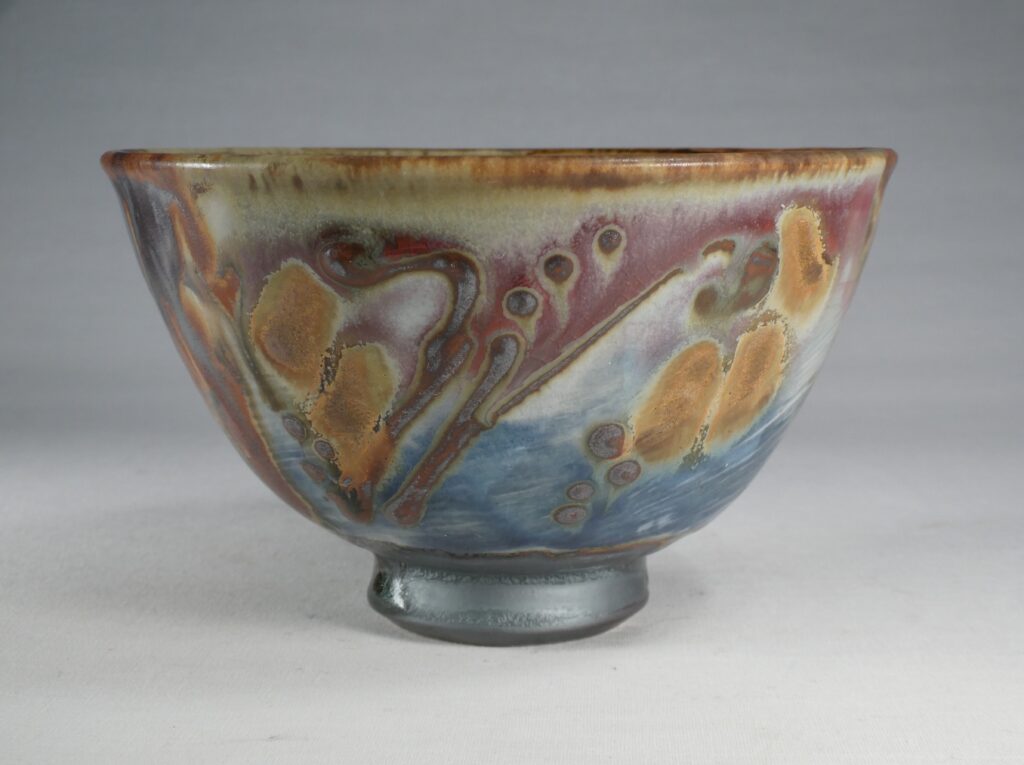
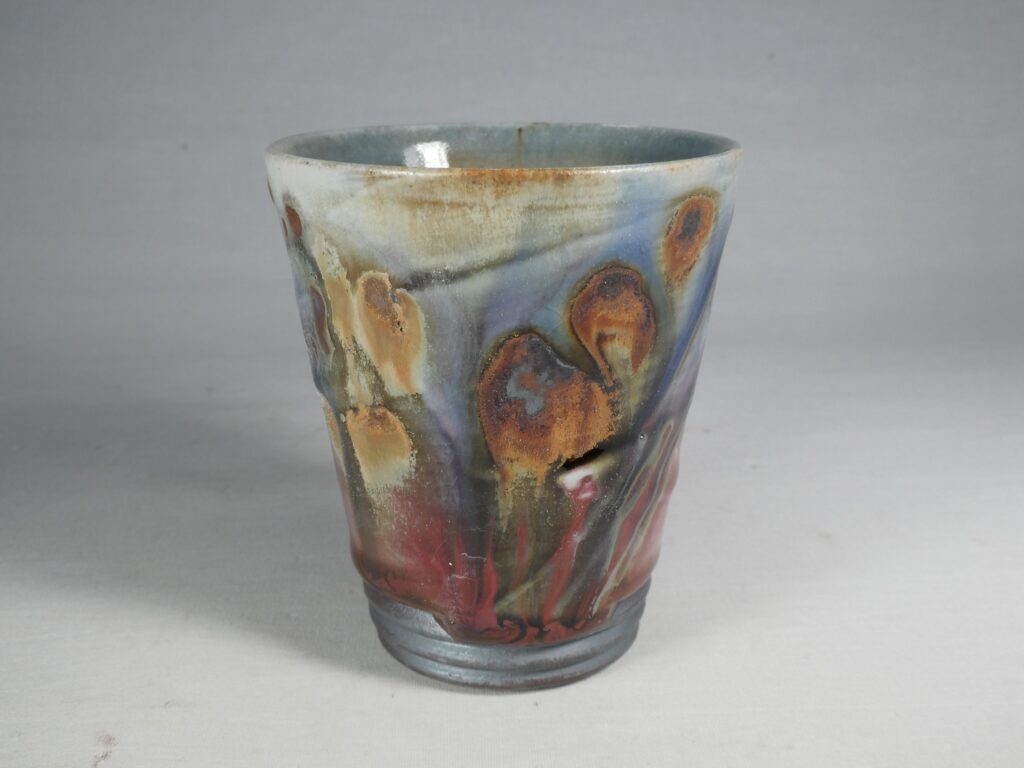
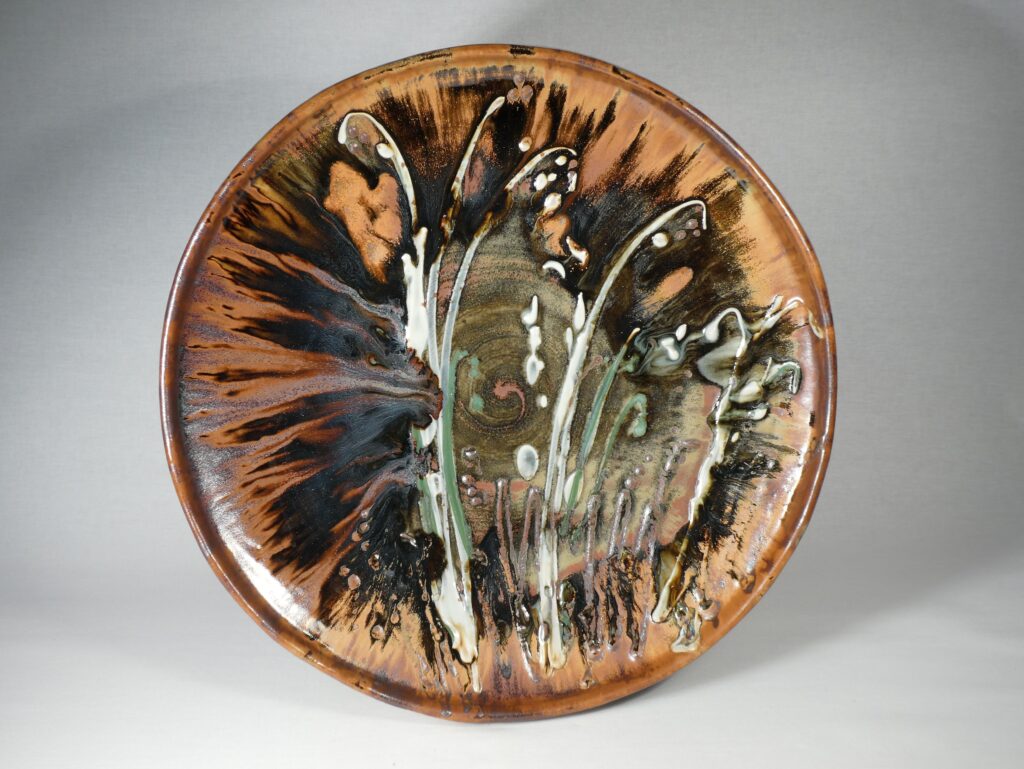
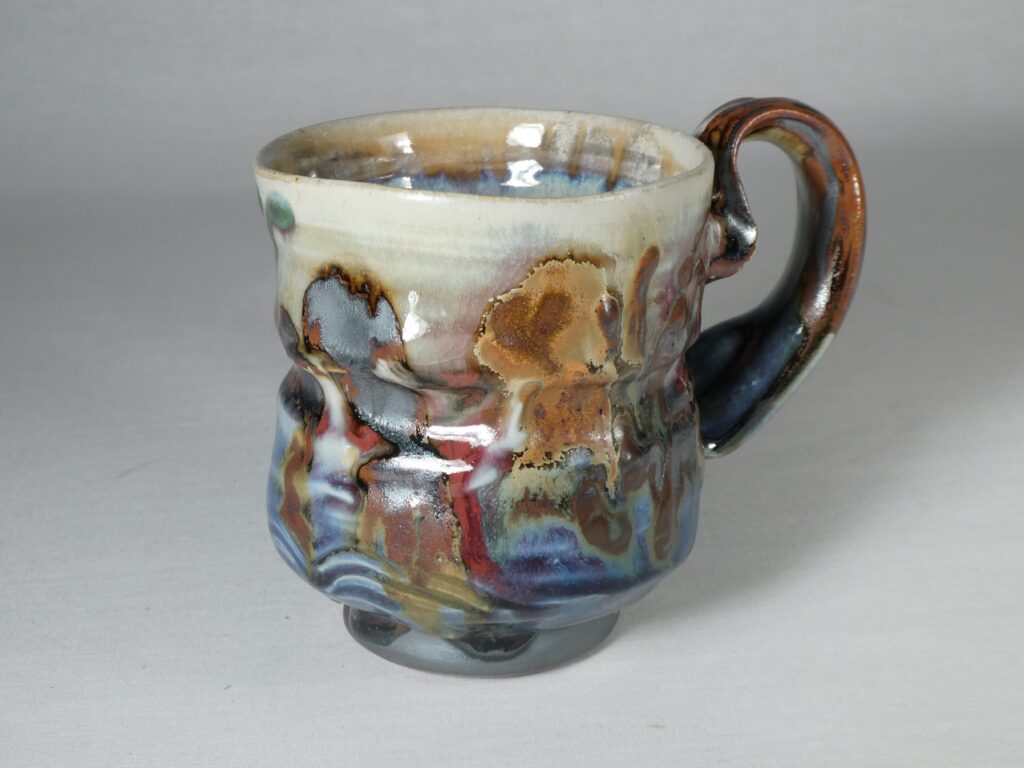
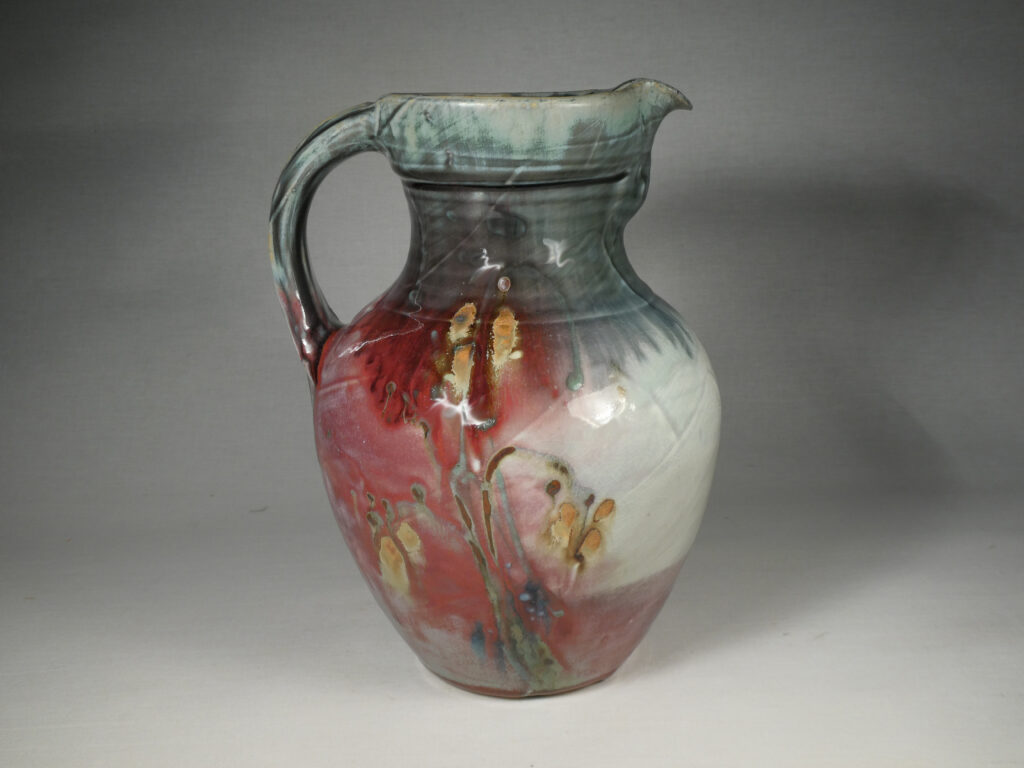
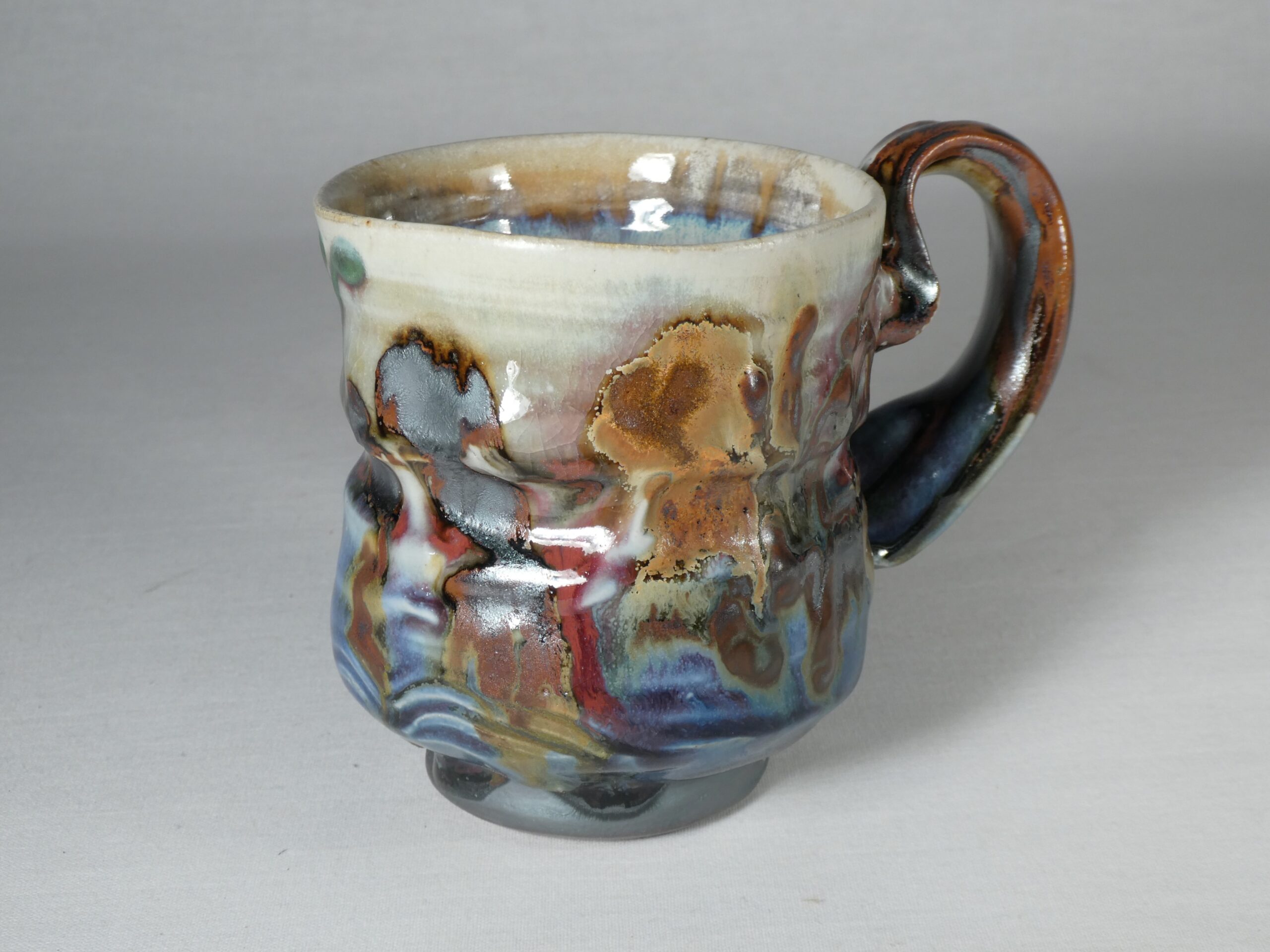
In 1978 I built a 40 cu.ft. oil fired kiln. Now, for the first time, I could make stoneware. I decorated with sponged, trailed, inlaid and poured slips. I dipped part of a pot in one glaze, with a different glaze on the rest. The overlaps were more interesting than the single glaze so I tried pouring instead of dipping to give more overlapping areas, with, at times, up to three layers of glaze. This is how I now glaze.
Glaze density is key. The glazes must be thin. Layered glazes can easily become too thick, running off the pot when fired, or completely obliterating any decoration. Larger pots attract an even thicker coat thus glaze densities must be thinned further.
Initially the firing goes quickly, around three hours to reach 1000c, then reduction for perhaps 10 hours, to 1320c. The iron in the slips becomes very active, bleeding both through and into the glazes often yielding the multi toned halos seen on the slip decoration.